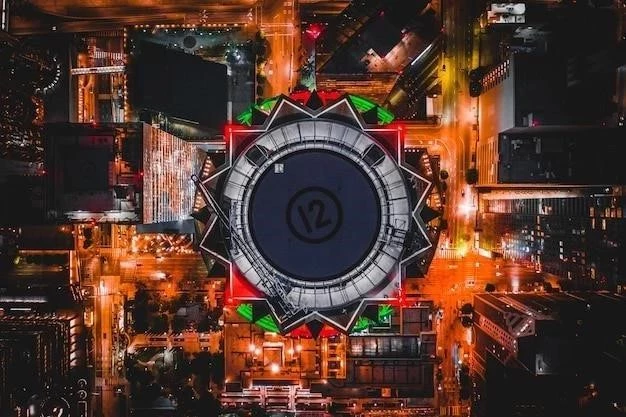

Crypto.com Arena: Los Angeles’ Premier Entertainment Venue
January 21, 2026
Cronos The EVM Compatible Blockchain
January 22, 2026
The blockchain landscape is undergoing a rapid transformation‚ with innovative Layer 1 protocols emerging to overcome the inherent limitations of earlier networks. Among these trailblazers‚ Sui stands out as a high-performance‚ permissionless‚ secure‚ and innovative object-centric blockchain meticulously designed for the sophisticated demands of the next generation of web3 applications. Developed by Mysten Labs‚ a formidable team of former Meta engineers who were instrumental in the Diem blockchain project‚ Sui is engineered to deliver unparalleled scalability‚ ultra-low-latency transaction processing‚ and a highly developer-friendly environment. It promises to fundamentally reshape how we interact with digital assets and decentralized applications‚ from complex DeFi ecosystems to immersive gaming experiences and beyond‚ by leveraging its unique architectural design and the robust Move programming language.
What is Sui?
Sui is a revolutionary Layer 1 blockchain and smart contract platform built from the ground up to empower creators‚ developers‚ and users alike to build and experience web3 applications that can scale to billions. Its foundational design principles are centered on horizontal scalability‚ meaning the network’s capacity to process an increasing volume of transactions can grow linearly by simply adding more computational resources. Unlike many traditional blockchain architectures that process transactions in a strictly sequential order‚ Sui employs an innovative approach that allows for the parallel execution of independent transactions. This drastically enhances throughput and significantly reduces latency‚ making Sui exceptionally well-suited for applications demanding instant finality and massive transaction volumes‚ such as dynamic metaverse environments‚ real-time gaming‚ and high-frequency financial trading platforms.
The Technology Behind Sui
Move Programming Language
Central to Sui’s formidable security‚ efficiency‚ and flexibility is the Move programming language. Originally conceived and developed by Meta for the Diem blockchain‚ Move is an open-source‚ Rust-based language meticulously crafted for safe and expressive resource management. It treats digital assets as “resources” with intrinsic type safety and ownership properties‚ which inherently prevents common vulnerabilities like reentrancy attacks or accidental duplication/deletion of assets. Move’s robust type system and ownership model make it an ideal‚ secure‚ and resilient choice for building reliable decentralized applications on the Sui blockchain.
Object-Centric Model
Sui fundamentally departs from the traditional account-centric blockchain models prevalent in networks like Ethereum. Instead of abstract accounts holding balances‚ Sui operates on an innovative object-centric model where all digital assets—be they tokens‚ NFTs‚ or even smart contracts themselves—are distinct‚ programmable objects‚ each identified by a unique ID. These objects can be either owned by a single address or shared among multiple addresses‚ enabling flexible and efficient management of digital assets. This paradigm simplifies the creation of complex on-chain logic and enables advanced features like dynamic NFTs and sophisticated DeFi primitives directly at the protocol level. All transactions on Sui are essentially interactions with these specific objects.
Parallel Execution & Narwhal/Bullshark DAG Consensus
Sui’s remarkable ability to achieve high scalability stems from its unique capacity to process independent transactions in parallel. This is facilitated by a novel consensus mechanism that intelligently differentiates between “owned objects” (managed by a single owner) and “shared objects” (requiring broader consensus for modification). Transactions involving only owned objects can often bypass the full consensus mechanism‚ achieving near-instant finality. For transactions that modify shared objects‚ Sui employs a sophisticated Byzantine Fault Tolerant (BFT) consensus protocol suite known as Narwhal and Bullshark. Narwhal functions as a high-throughput mempool‚ ensuring data availability and efficient transaction ordering‚ while Bullshark acts as the consensus engine that securely finalizes the ordering of these shared object transactions. This Directed Acyclic Graph (DAG) based approach cleverly avoids global ordering bottlenecks‚ leading to significantly higher throughput and more efficient resource utilization.
Horizontal Scalability
A cornerstone of Sui’s design is its inherent horizontal scalability. This means that as the demand on the network grows‚ validators can seamlessly increase the network’s processing capacity by simply adding more machines to their existing infrastructure‚ rather than being forced to upgrade individual‚ monolithic machines. This architectural choice allows the network’s overall throughput to scale linearly with the expansion of its validator set and available hardware resources‚ ensuring that Sui can gracefully adapt to burgeoning future demands without compromising either performance or the fundamental principles of decentralization.
Key Features and Advantages
- Unparalleled Scalability & Throughput: Engineered for global mass adoption with its distinctive parallel transaction execution capabilities.
- Ultra-Low Latency: Offers near-instant transaction finality‚ particularly for straightforward transfers of owned objects‚ critical for real-time applications.
- Developer-Friendly Ecosystem: Leverages the Move language‚ providing strong safety guarantees‚ clear asset ownership semantics‚ and a rich suite of SDKs‚ libraries‚ and tooling that significantly enhance the development experience‚ fostering frictionless application creation.
- Enhanced Security: Move’s intrinsic design prevents a wide array of common smart contract vulnerabilities‚ making dApps inherently more secure.
- Rich On-Chain Asset Management: The object-centric model facilitates highly programmable‚ dynamic‚ and composable digital assets‚ unlocking innovative use cases across gaming‚ NFTs‚ and complex DeFi primitives.
- Sui Bridge: Essential for expanding its utility and reach‚ the Sui Bridge facilitates seamless interoperability with other major blockchain networks.
Use Cases and Ecosystem
Sui’s robust and high-performance architecture makes it an ideal foundation for a diverse array of innovative applications:
- Decentralized Finance (DeFi): Its high throughput and low latency are perfectly suited for high-volume DEXs‚ sophisticated lending protocols‚ stablecoins‚ and complex financial instruments requiring rapid execution.
- Gaming: Enables truly seamless in-game asset transfers‚ dynamic NFTs that evolve based on player actions or game states‚ and scalable gaming experiences unhindered by network congestion.
- SocialFi: Provides a scalable infrastructure for decentralized social networks‚ on-chain identity solutions‚ and reputation systems.
- Non-Fungible Tokens (NFTs): Facilitates the creation of advanced dynamic NFTs‚ fractional ownership models‚ and rich‚ programmable metadata directly on-chain.
- Enterprise Solutions: Capable of powering demanding business-critical applications such as supply chain management‚ tokenized real-world assets‚ and secure data registries requiring high reliability and performance.
The Sui ecosystem is experiencing rapid expansion‚ with a burgeoning number of dApps‚ secure wallets‚ comprehensive explorers‚ and essential infrastructure projects actively building on its resilient foundation‚ thereby fostering a vibrant and innovative community.
The SUI Token
The native utility and governance token of the Sui network is SUI; It fulfills several pivotal functions crucial for the network’s operation and security:
- Network Fees (Gas): SUI is the primary currency used to pay for transaction processing and the storage of data on the Sui blockchain‚ ensuring the network’s operational sustainability and economic stability.
- Staking: SUI holders can actively participate in the network’s security by staking their tokens with validators. This contributes to the Proof-of-Stake consensus mechanism‚ helps secure the network‚ and allows stakers to earn rewards for their participation.
- Governance: In the future‚ SUI tokens are envisioned to be utilized for on-chain governance‚ empowering token holders to propose and vote on key protocol upgrades‚ changes‚ and strategic decisions‚ thereby decentralizing control.
- Storage Fund: A portion of the network fees is perpetually allocated to a storage fund. This fund is designed to subsidize the long-term costs of storing on-chain data‚ ensuring the sustainability and accessibility of historical data for decades to come.
Challenges and Future Outlook
Despite its groundbreaking technology and ambitious vision‚ Sui navigates a landscape rife with challenges:
- Intense Competition: The Layer 1 blockchain space is fiercely competitive‚ with well-established giants like Ethereum (and its robust L2s)‚ as well as other high-performance chains such as Solana and Aptos.
- Ecosystem Growth & Network Effects: Cultivating a vibrant‚ engaged‚ and sticky developer and user ecosystem requires sustained effort‚ significant investment‚ and the natural development of strong network effects over time.
- Security Audits & Widespread Adoption: As a relatively nascent protocol‚ continuous rigorous security audits and achieving widespread adoption are paramount for building long-term trust and ensuring its ultimate success.
- Decentralization & Regulatory Scrutiny: The initial token distribution and the size of the validator set are often subjects of scrutiny for new chains. Careful management and progressive decentralization are crucial to address concerns and navigate evolving regulatory landscapes.
However‚ Sui’s innovative architecture‚ backed by a highly experienced team‚ and its unwavering focus on developer experience position it as a formidable contender in the blockchain arena. Its inherent ability to efficiently handle exceptionally high transaction volumes and manage complex asset logic opens up unprecedented possibilities for next-generation web3 applications. This technological edge could enable Sui to capture a substantial market share as the industry matures and demands for performance increase. The future of Sui appears exceptionally promising‚ with ongoing development and a rapidly growing community continually pushing the boundaries of what is achievable on a decentralized network.
Sui represents a monumental advancement in blockchain technology‚ offering a robust‚ highly scalable‚ and inherently secure platform meticulously crafted for the next generation of decentralized applications. By ingeniously leveraging the powerful Move programming language‚ an intuitive object-centric data model‚ and revolutionary parallel transaction execution capabilities‚ Sui effectively addresses and overcomes many of the performance bottlenecks that have historically plagued older blockchain networks. While it operates within a highly competitive landscape and faces its share of challenges‚ Sui’s profound technical prowess‚ combined with its strong commitment to empowering developers‚ firmly positions it as a pivotal player in shaping the future trajectory of web3. It promises to usher in an era of a more efficient‚ secure‚ and globally accessible digital economy for everyone.