
What is Crypto Cryptography and Cryptocurrency
March 20, 2026
Jio Crypto Coin Speculation vs Reality
March 21, 2026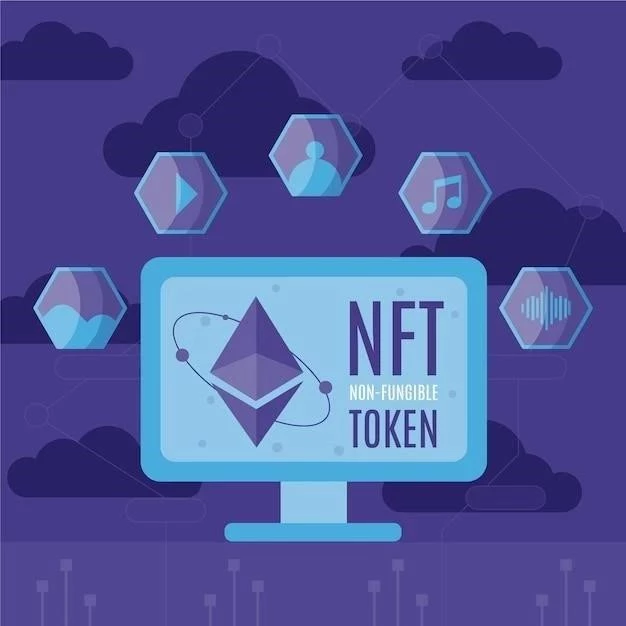
Ethereum is not just another cryptocurrency; it is a decentralized, open-source blockchain platform that has fundamentally reshaped the digital landscape. Often hailed as the world’s programmable blockchain, Ethereum’s innovation extends far beyond simply facilitating peer-to-peer digital cash transactions. Its true power lies in its ability to host smart contracts and decentralized applications (dApps), creating an entirely new paradigm for how we interact with digital services and assets.
The Genesis and Vision
Conceived by Vitalik Buterin in 2013 and officially launched in July 2015, Ethereum was designed to be a more versatile blockchain. While Bitcoin introduced decentralized money, Ethereum aimed to provide a decentralized global computer, capable of executing any program. This vision led to the creation of the Ethereum Virtual Machine (EVM), a Turing-complete software environment that allows developers to create and deploy smart contracts and dApps.
Core Components of the Ethereum Ecosystem
- Ether (ETH): The native cryptocurrency of the Ethereum network. ETH serves multiple purposes: it acts as a store of value, a medium of exchange, and “gas” to pay for transaction fees and computational services on the network.
- Smart Contracts: Self-executing contracts with the terms of the agreement directly written into code. They run exactly as programmed without any possibility of downtime, censorship, fraud, or third-party interference. Smart contracts are the foundational building blocks for most applications on Ethereum.
- Decentralized Applications (dApps): Applications that run on a decentralized network, typically using smart contracts. Unlike traditional apps controlled by a single entity, dApps operate autonomously and transparently on the blockchain.
- Ethereum Virtual Machine (EVM): The runtime environment for smart contracts in Ethereum. It is a powerful, sandboxed virtual stack embedded within each full Ethereum node, responsible for executing transaction code.
Transformative Use Cases
Ethereum’s programmability has unlocked a vast array of innovative applications:
- Decentralized Finance (DeFi): A rapidly growing sector leveraging Ethereum to recreate traditional financial services (lending, borrowing, trading, insurance) in a decentralized, permissionless, and transparent manner.
- Non-Fungible Tokens (NFTs): Unique digital assets representing ownership of items like art, collectibles, music, and virtual real estate. Most major NFT projects are built on Ethereum’s ERC-721 or ERC-1155 token standards.
- Decentralized Autonomous Organizations (DAOs): Organizations governed by smart contracts and code, rather than traditional hierarchical structures. Members often use tokens to vote on proposals, enabling collective decision-making.
- Enterprise Solutions: Companies are utilizing private or consortium versions of Ethereum to streamline supply chains, manage intellectual property, and enhance data security.
- Gaming & Metaverse: Ethereum powers in-game economies, ownership of digital assets, and the foundational layers of virtual worlds.
The Evolution to Ethereum 2.0 (The Merge and Beyond)
One of the most significant developments in Ethereum’s history was its transition from a Proof-of-Work (PoW) consensus mechanism to Proof-of-Stake (PoS) through “The Merge,” completed in September 2022. This monumental upgrade marked the culmination of years of research and development, aiming to address critical challenges such as scalability, security, and environmental sustainability.
The Merge saw the original Ethereum mainnet merge with the Beacon Chain, which had been running in parallel since December 2020 and coordinated the network’s new PoS consensus. Instead of energy-intensive mining, PoS relies on validators who “stake” their ETH to secure the network and validate transactions. This transition dramatically reduced Ethereum’s energy consumption by over 99.9%, making it an eco-friendlier blockchain.
Future upgrades, collectively referred to as “Serenity” or “Ethereum 2.0” (though the branding has largely shifted to simply “Ethereum” post-Merge), include sharding. Sharding aims to further enhance scalability by dividing the blockchain into smaller, more manageable pieces called “shards,” allowing for parallel processing of transactions and significantly increasing transaction throughput. This multi-phase roadmap promises a more robust, efficient, and user-friendly network, capable of supporting a global scale of decentralized applications.
Challenges and the Road Ahead
Despite its successes, Ethereum faces ongoing challenges. Prior to The Merge, high gas fees and network congestion were significant hurdles for users and developers. While PoS laid the groundwork for better scalability, sharding and other layer-2 solutions (like rollups) are crucial for truly overcoming these limitations. Competition from other Layer-1 blockchains (e.g., Solana, Avalanche, Polkadot) also pushes Ethereum to continuously innovate.
Regulatory uncertainty across different jurisdictions poses another challenge, as governments grapple with how to classify and oversee decentralized technologies. However, Ethereum’s established network effect, vibrant developer community, and continuous evolution position it as a leader in the blockchain space. Its role as the foundation for Web3 – a decentralized internet built on blockchain technology – continues to solidify, promising a future where digital interactions are more open, transparent, and user-controlled.
Ethereum stands as a monumental achievement in decentralized technology, moving far beyond its initial promise purely as a digital currency. By enabling smart contracts and dApps, it has fostered ecosystems like DeFi and NFTs, igniting a global movement towards greater digital autonomy and innovation. With its successful transition to Proof-of-Stake and a clear roadmap for further scalability, Ethereum is poised to remain at the forefront of the blockchain revolution, continuing to drive the evolution of Web3 and redefine the possibilities of a decentralized future.