

Using the Binance Bitcoin Wallet
August 1, 2026
Understanding XRP Whale Flows and Their Impact on Price Action
August 2, 2026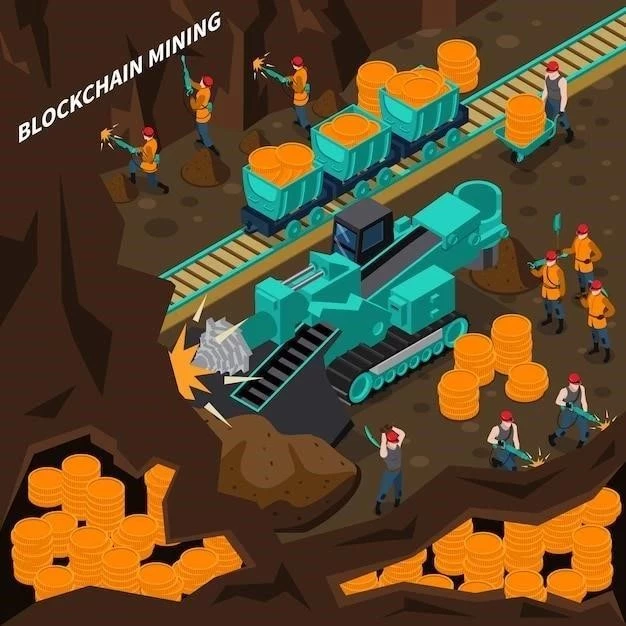
Bitcoin Core, originally known as Bitcoin-Qt, is the foundational software client for the Bitcoin network․ While often associated with simply using Bitcoin, it historically included mining capabilities․ This article details Bitcoin Core’s mining functionality, its evolution, and current relevance․ It’s crucial to understand that modern, efficient Bitcoin mining is rarely done directly with Bitcoin Core due to specialized hardware․
Historical Context & Built-in Mining
Initially, Bitcoin Core was a viable option for mining․ Satoshi Nakamoto, Bitcoin’s creator, included a basic CPU miner within the original code․ This allowed early adopters to participate in the network’s proof-of-work consensus mechanism and earn Bitcoin rewards․ The miner worked by attempting to solve cryptographic puzzles – finding a nonce that, when hashed with the block data, produced a hash below a target difficulty․
How the Built-in Miner Worked
The process involved:
- Block Template Creation: Bitcoin Core would construct a block template containing recent transactions․
- Nonce Iteration: The software would repeatedly modify the ‘nonce’ value within the block header․
- Hashing: For each nonce, the block header would be hashed using the SHA-256 algorithm (twice, hence “double SHA-256”)․
- Difficulty Check: The resulting hash would be compared to the current difficulty target․ If the hash was lower, a valid block was found!
This process was, and remains, computationally intensive․
The Rise of Specialized Hardware & Decline of Core Mining
As the Bitcoin network grew, the difficulty of mining increased exponentially․ CPU mining quickly became unprofitable․ Graphics Processing Units (GPUs) offered a significant performance boost, followed by Field-Programmable Gate Arrays (FPGAs), and ultimately, Application-Specific Integrated Circuits (ASICs)․ ASICs are specifically designed only for Bitcoin mining, offering orders of magnitude greater hash power than CPUs or GPUs․
Because of this, using Bitcoin Core’s built-in miner became impractical․ The hash rate achievable with a CPU is minuscule compared to ASICs, meaning the chances of finding a block are virtually zero․ Mining pools emerged, allowing miners to combine their hash power and share rewards, but even then, Bitcoin Core wasn’t competitive․
Current Mining Status in Bitcoin Core
While the code for the miner still exists within Bitcoin Core, it’s largely disabled by default․ The -regtest mode allows for testing mining functionality on a private network, but it’s not intended for real-world mining․ Attempting to mine on the main Bitcoin network with Bitcoin Core’s CPU miner is a waste of resources․
Enabling Mining (For Testing Only)
To enable mining in -regtest mode, you would typically use the -miner command-line option when starting Bitcoin Core; However, this is solely for development and testing purposes․
Alternatives to Bitcoin Core for Mining
If you’re interested in Bitcoin mining, you’ll need to use specialized software designed to interface with ASICs or GPU mining rigs․ Popular options include:
- CGMiner: A widely used, open-source mining application․
- BFGMiner: Another popular, versatile mining program․
- Proprietary ASIC Software: ASIC manufacturers often provide their own software for controlling and monitoring their devices․
Bitcoin Core’s mining functionality is a historical artifact․ While it played a crucial role in the early days of Bitcoin, it’s no longer a viable option for profitable mining․ Modern Bitcoin mining requires specialized hardware and dedicated mining software․ Bitcoin Core remains the most secure and reliable way to use Bitcoin, but not to mine it effectively․


